Transparent wood (01.21)
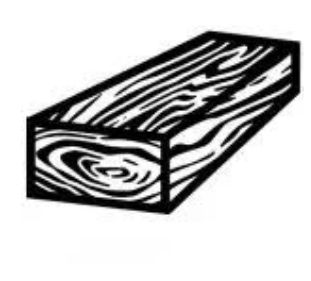
Researchers at the University of Maryland have discovered a new technique to make wood transparent. In the past, attempts had been made to make wood transparent by using specialised chemicals to remove lignin. However, the main drawback was that this weakened the wood.
The new method uses an alteration of the lignin. At the beginning of the process, the molecules responsible for giving the wood its colour are removed. Then, a special hydrogen peroxide agent is applied to its surface which is then exposed to UV light (or natural sunlight). After these treatments, the wood takes on a white colour. The wood is then soaked in ethanol for a more thorough cleaning. Finally, the pores are filled with colourless epoxy to make the material smooth and almost perfectly transparent. This gives the wood the qualities of being able to transmit up to 90% of light and the material is 50 times stronger than conventionally rendered transparent material. It is also lighter and, above all, stronger than glass and provides better insulation.[1][2]
This discovery could become a real revolution for the construction industry and completely change the image of buildings in the future. Research is also underway into technologically advanced, transparent wood materials, which will additionally be touch-sensitive and will provide an alternative to various types of displays. Due to their strength corresponding to the characteristics of wood, such displays will prove themselves in harsh environments where glass often fails.[3]
Plastic-eating yeasts to save the planet (09.2021)
The environmental pollution caused by plastics is one of the biggest environmental disasters. Microparticles of plastics, which have a diameter of less than 5 millimetres, pose a particular threat. They can be found in water bodies, but also accumulate in living organisms such as fish, plankton and the human body.
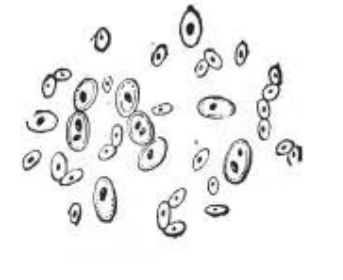
This problem has been addressed by the research team of Dr Piotr Biniarz from the Wrocław University of Environmental and Life Sciences. Their research consists of finding microorganisms that naturally decompose plastics due to the enzymes that they possess. However, as this process is usually inefficient, it is planned to clone their enzymes into fast-growing yeasts (Yarrowia lipolytica). These organisms will not only be able to produce enzymes more efficiently, but also to grow on municipal wastewater or waste so that micropollutants can be removed directly from it.[[11]
 chemist-REY science blogs